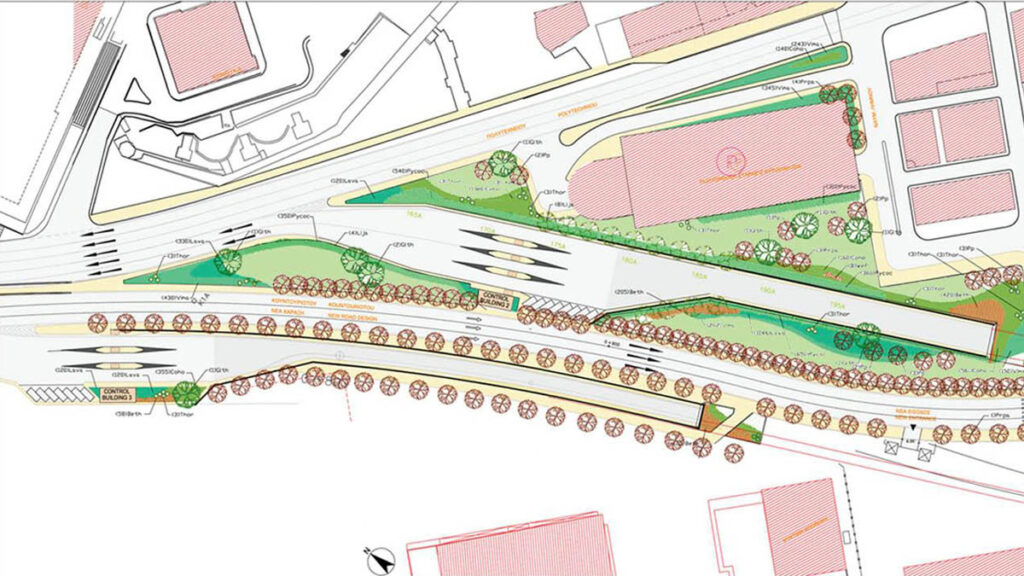
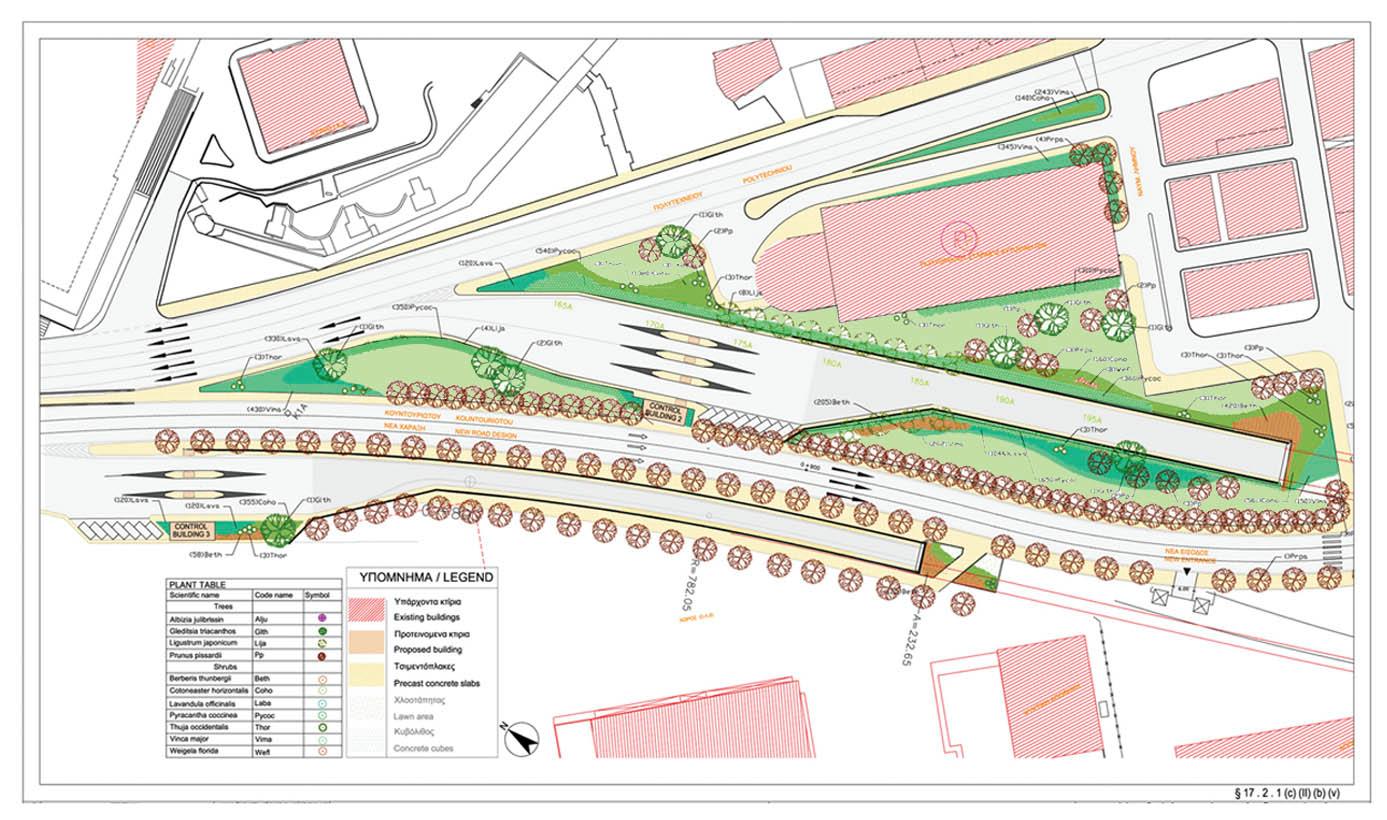
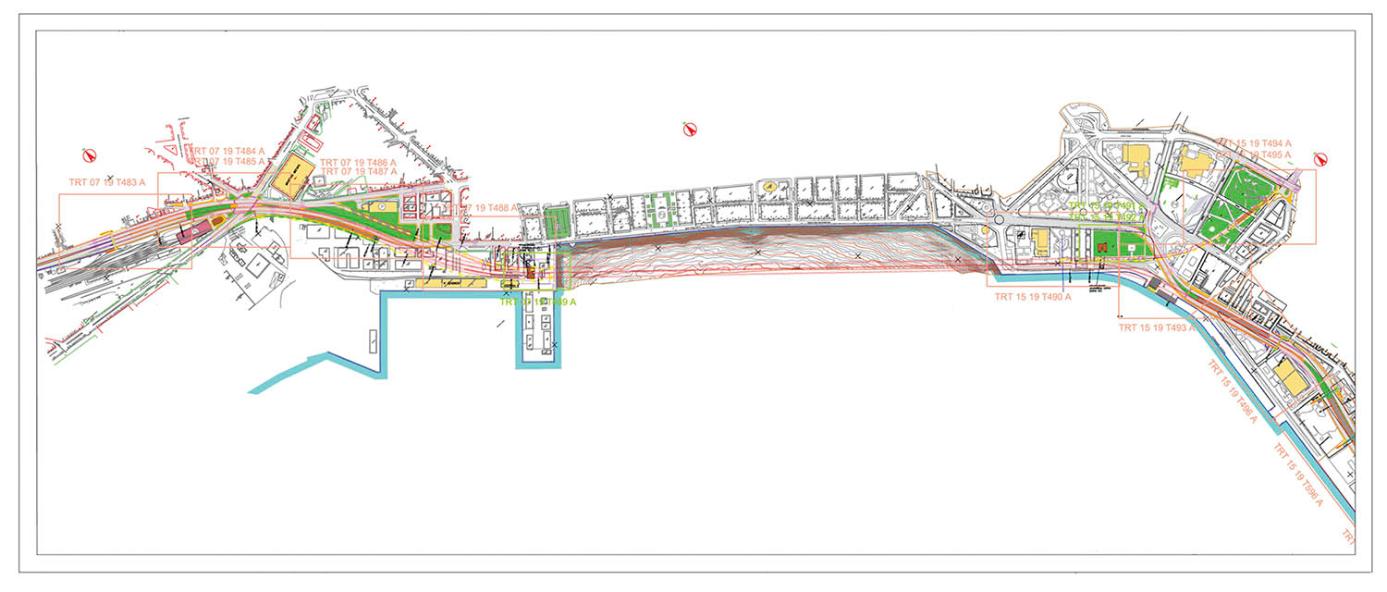
Landscape–Roidis Studio was commissioned to develop the landscape strategy for the mitigation of the submerged tunnel entrances and façades, together with the comprehensive redesign of Thessaloniki’s pedestrianized waterfront, including the iconic Leoforos Nikis. The project sought to transform a major infrastructure intervention into an opportunity for large-scale urban regeneration, strengthening the relationship between the city and the Thermaic Gulf.
The proposal addressed two complementary objectives: the sensitive integration of the tunnel infrastructure into the urban landscape and the creation of a continuous, high-quality public realm above ground. The tunnel portals were carefully embedded within the surrounding topography through landform modelling, strategic planting, and landscape buffers that softened the visual impact of the engineering structures while reinforcing their environmental integration.
At surface level, the diversion of traffic underground allowed the waterfront to be reimagined as a pedestrian-oriented civic landscape. The design introduced generous promenades, a unified paving language, shaded seating areas, structured tree planting, integrated lighting, and coordinated street furniture to create a coherent and inviting public environment. Particular emphasis was placed on strengthening visual and physical connections with the sea, enhancing the waterfront as Thessaloniki's principal urban façade.
Leoforos Nikis was conceived as the focal point of the intervention—a vibrant promenade that encourages walking, recreation, social interaction, and cultural activity while celebrating the city's unique coastal identity.
By bringing together infrastructure, landscape, and public space within a single design vision, the proposal demonstrates how landscape architecture can transform complex engineering projects into resilient, human-centered urban environments, where mobility, ecology, and civic life coexist in balance.